Automated Local AEO vs. Manual Content Creation: The Paigent Six-Step Workflow Explained
Paigent's six-step automated workflow generates branch-specific proof at scale for multi-location businesses, putting Local AEO and Ask Maps visibility on autopilot.
Automated Local AEO vs. Manual Content Creation: The Paigent Six-Step Workflow Explained
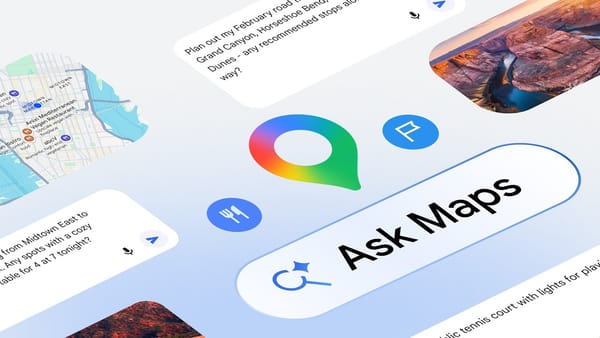
Multi-location businesses face a brutal reality: 78% of local service brands are completely invisible to Ask Maps — and manual content creation, written once at brand level, cannot fix that. Ask Maps shows only 3–8 businesses per query, which means the window for your branch to appear is narrow and unforgiving. Paigent's six-step automated workflow changes the equation, generating branch-specific proof at scale so every location wins its local AI search — without your team writing a single word manually.
Key Takeaways
- Ask Maps shows only 3–8 businesses per local query — branches with optimized, locally grounded profiles are measurably more likely to appear in those recommendations (Map Ranks, 2026).
- 78% of local service brands are invisible to Ask Maps (5W AI Visibility Index, 2026), meaning the default outcome for manually-managed multi-location brands is zero AI visibility.
- Paigent's six-step workflow takes you from brand setup to auto-publishing, covering 10, 50, or 150+ locations within the same pipeline.
- AI identifies what makes each location unique and suggests branch-specific content topics — something no centralized marketing team writing generic brand content can replicate at scale.
- Rollout is fast: 3 real estate offices in 1 week, 25 cleaning service branches in 2 weeks — with a 14-day free trial and no credit card required.
- Built specifically for Ask Maps / Local AEO ranking, not generic brand AEO, targeting the Gemini AI recommendation algorithm that powers Google Maps suggestions.
Why Every Location Needs Its Own Local Proof
Brand-level content doesn't prove local relevance. Ask Maps — powered by Gemini AI on Google Maps — doesn't surface your brand. It surfaces a specific branch that has demonstrated it belongs in a specific neighborhood, for a specific query. If your Houston branch, your Denver office, and your Atlanta location all share the same centralized blog content, Gemini AI sees one undifferentiated brand, not three locally authoritative businesses.
The visibility gap is severe. Only 1.2% of local HVAC branches are cited by ChatGPT for contractor queries (Marketing Code, 2026). Manual content creation simply cannot close that gap across dozens or hundreds of locations. A centralized team writing even ten posts a month cannot produce the volume and specificity of location-specific content that Ask Maps requires to identify and recommend each branch.
AEO platforms with AI content automation analyze search patterns, identify content gaps, and generate optimized responses at scale with minimal human intervention — that's the architectural difference. Manual content creation is reactive, slow, and inherently generic. Automated branch-specific proof generation is systematic, scalable, and tied directly to what Ask Maps reads to make branch recommendations.
The stakes are concrete. Real estate offices moving from invisible to visible in Ask Maps see 10–15 new buyer leads per month. Pet grooming salons generate 6–10 more bookings monthly. These outcomes depend entirely on branch-level authority, not brand-level authority.
The Real Cost of Manual Content Creation at Scale
Manual content creation feels manageable at two or three locations. At ten, it strains your team. At fifty, it breaks entirely.
Consider the arithmetic. A multi-location restaurant group with 30 branches needs neighborhood-specific content for each location — menus that reference local suppliers, blog posts about the specific neighborhood, content that proves the branch belongs in that community's AI search results. A centralized copywriter producing one post per day would need a month just to cover each branch once. Ask Maps rewards continuous, fresh, locally grounded content — not a single annual update per branch.
The failure mode isn't just slow output. Manually written content tends toward brand-level generics: "We're proud to serve the greater metro area." That sentence does nothing for your Midtown branch, your Buckhead branch, or your Decatur branch individually. Gemini AI can't use it to distinguish why one branch deserves to appear for a hyperlocal query.
There's also the consistency problem. Human writers produce variable quality, variable voice, and variable local specificity depending on who's writing, when, and for which branch. An operator managing 50 locations cannot review every piece to ensure it's genuinely neighborhood-specific and on-brand simultaneously. The result is a patchwork of content that satisfies no single Ask Maps signal reliably.
Modern workflow automation platforms enable teams to automate AEO operations — including content brief generation, schema validation, and AI citation monitoring — without writing custom code, pointing to where the industry is moving. Paigent is built specifically for multi-location operators who need to move there now.
How Paigent Delivers the Six-Step Automated Workflow
This is the exact pipeline Paigent runs for every multi-location operator — from a single brand profile to published, branch-specific AEO content across your entire footprint.
- Set up your brand voice and business model. You configure your brand's tone, service categories, and core positioning once. Every piece of content generated downstream inherits this foundation — keeping you always on-brand across every branch and every topic, regardless of how many locations you're running.
- Add your locations. Whether you're adding 10, 50, or 150+ branches, Paigent ingests your location data. Each branch is treated as a distinct entity with its own local context — not a clone of your flagship.
- AI identifies what makes each location unique. This is where the platform diverges from generic content tools. Paigent's AI analyzes each branch to surface the neighborhood-specific signals — local landmarks, service area characteristics, community context — that distinguish one location from another in the eyes of Ask Maps.
- AI suggests branch-specific content topics. Rather than leaving your team to brainstorm 150 separate content calendars, Paigent surfaces targeted topic suggestions for each location, grounded in what Ask Maps reads to make branch recommendations in that specific geography.
- Select and generate content. You review the suggested topics and trigger generation. Content is produced on-brand, location-specific, and optimized for Local AEO signals — not generic SEO.
- Publish manually or switch to auto-mode. For operators who want full control, manual publishing is available. For operators running at scale, auto-publishing puts local AEO on autopilot — content goes live across your branch network without requiring your team to touch each post.
Why Your Branch Invisibility Is an Addressable Problem
The instinct when facing Ask Maps invisibility is to assume the platform favors large brands with established authority. That's the wrong frame. Ask Maps favors branches with demonstrated local proof — and that proof is content-based, not budget-based.
An automated AEO/GEO workflow runs a continuous loop — monitoring citations, analyzing gaps, optimizing content, publishing schema and entity markup, and tracking results — making AI visibility maintenance scalable across multiple clients. What this confirms is that visibility in AI answer engines is a process problem, not a brand reputation problem. The branches that appear in Ask Maps are the ones that have systematically generated the right local signals — regardless of whether the parent brand is a national franchise or a regional chain.
For operators hesitant about whether an automated workflow can replace the nuance of human-written content: the question is the wrong one. Manual content at 50 locations isn't nuanced — it's impractical. The actual choice is between inconsistent, sporadic manual output that satisfies no Ask Maps signal reliably, and systematic, branch-specific proof generated at scale that targets the Gemini AI recommendation algorithm directly.
The visibility gap is addressable. Moving from #0 (invisible) to #1–2 in Ask Maps answers is a documented outcome for branches that deploy location-specific content consistently — and Paigent's workflow exists specifically to make that movement reproducible across every branch in your network. For a deeper look at how location-specific content drives local marketing outcomes, see how dental practices are approaching local digital visibility in 2026.
Why Choose Paigent
Paigent is built for one specific problem that most AEO tools miss entirely: franchise networks and multi-location brands need branch-level content authority to rank in Ask Maps, not brand-level strategy.
Here's what that means in practice, using Paigent's own proof points:
- Generates branch-specific proof at scale so every location wins its local AI search — not a single shared content pool dressed up as local.
- Six-step automated workflow from brand setup to auto-publishing — you configure the brand once, and the pipeline handles every location downstream.
- AI identifies what makes each location unique and suggests branch-specific content topics — the system surfaces what your team would never have time to research manually across 50+ branches.
- Always on-brand — consistent voice across every branch and topic — brand standards don't degrade as you scale from 10 to 150 locations.
- Live in minutes with a 14-day free trial, no credit card required — 3 real estate offices onboarded in 1 week; 25 cleaning service branches in 2 weeks.
- Built specifically for Ask Maps / Local AEO ranking, not just generic brand AEO — the content targets the Gemini AI recommendation algorithm on Google Maps, not a generalized search engine optimization framework.
Cancel anytime. No lock-in. The platform is confident enough in the workflow to offer that.
Multi-Location Operators: Industry-Specific Visibility Gains
Paigent serves multi-location businesses across several verticals where branch-level Ask Maps visibility has direct revenue implications.
Mortgage lenders and real estate franchises operate in a referral-driven, geography-sensitive environment. A buyer searching Ask Maps for a mortgage lender in their specific neighborhood needs to find your branch, not your brand. Real estate offices moving from invisible to cited in Ask Maps see 10–15 new buyer leads per month — with annual revenue increases of $100K–$200K per office on record.
Restaurant groups need neighborhood-specific content that signals local belonging: local supplier relationships, community involvement, neighborhood-specific menu context. Generic brand content doesn't carry that signal. Branch-level proof does.
HVAC, plumbing, and cleaning service chains operate in high-urgency, high-value query categories where only 1.2% of local HVAC branches are currently cited by AI engines for contractor queries (Marketing Code, 2026). That near-zero citation rate represents an enormous opportunity for operators who deploy branch-specific content before competitors do. HVAC and plumbing operators can deploy 25 branches in 2 weeks — and the seasonal revenue impact per branch runs into six figures.
Pet grooming salons and retail chains run on repeat bookings driven by proximity and trust. Ask Maps visibility converts directly into 6–10 more bookings monthly per salon when branch-level proof is in place.
Across all these verticals, the mechanism is the same: Paigent's six-step workflow generates the location-specific content that Ask Maps reads — on autopilot, at scale, for every branch simultaneously.
Ready to put local AEO on autopilot for every branch in your network? Start your 14-day free trial at getpaigent.com — no credit card required — and see your first branch content live in minutes.
Frequently Asked Questions
How does Paigent's six-step workflow differ from using a general content automation platform like Zapier or n8n?
General automation platforms like Zapier or n8n can automate content briefs and schema validation, but they require significant custom configuration and don't contain branch-level intelligence. Paigent's workflow is purpose-built for multi-location Ask Maps optimization: the AI identifies what makes each specific branch unique and generates neighborhood-specific content topics without custom code or manual research at the branch level.
What exactly does "branch-specific proof" mean in the context of Ask Maps optimization?
Branch-specific proof is location-level content that signals to Gemini AI on Google Maps that a specific branch — not just the parent brand — is locally relevant for a specific neighborhood query. Ask Maps shows only 3–8 businesses per query; generic brand content cannot differentiate one branch from another. Branch-specific proof gives each location its own documented local authority that Ask Maps reads to make recommendations.
How quickly can a multi-location operator get all branches live on Paigent?
Rollout timelines depend on network size, but Paigent's documented deployment speeds include 3 real estate offices in 1 week, 6 pet grooming salons in 1 week, 10–12 plumbing branches in 2 weeks, and 25 cleaning service branches in 2 weeks. The platform supports 10, 50, or 150+ locations within the same pipeline, and the 14-day free trial — with no credit card required — lets operators test across their full footprint before committing.
Does Paigent work for both small multi-location operators and large franchise networks?
Yes. The platform scales from 10 to 150+ locations within a single workflow. Brand voice is configured once at setup; every branch downstream inherits consistent tone while receiving its own location-specific content. Whether you're a regional HVAC chain with 10 branches or a national real estate franchise with 150+ offices, the same six-step pipeline generates branch-specific content across the full network.
What happens to brand consistency when AI generates content for dozens of different locations?
Brand consistency is built into Step 1 of the workflow: you set up your brand voice and business model once, and every piece of content generated across every branch and every topic inherits that foundation. Paigent's positioning is "always on-brand" — the AI applies consistent voice standards at scale, which is operationally harder to guarantee with a distributed manual writing team than with a centralized AI pipeline.
Which industries does Paigent serve, and does the Local AEO approach differ by vertical?
Paigent is trusted by mortgage lenders, restaurant groups, real estate franchises, HVAC and plumbing chains, cleaning services, pet grooming salons, and retail chains. The underlying Ask Maps optimization mechanism is consistent across verticals — branch-specific content targeting Gemini AI's recommendation algorithm — but the AI identifies unique local signals relevant to each branch's specific service category, so a plumbing branch and a restaurant branch receive appropriately different neighborhood-specific topic suggestions.
Is there a commitment required, and what does the free trial include?
Paigent offers a 14-day free trial with no credit card required, and subscriptions can be cancelled at any time. The trial gives multi-location operators access to the full six-step automated workflow — from brand setup through auto-publishing — across their location network, making it possible to see branch-specific content live before making any financial commitment.