How Paigent Automates Local AI Search Ranking for Multi-Location Businesses

Paigent automates Ask Maps authority for every branch location — no marketing team needed. See the six-step workflow, expected results, and start a free 14-day trial.
How Paigent Automates Local AI Search Ranking for Multi-Location Businesses
Local AI search has fundamentally changed how customers find your nearest branch — and most multi-location brands are losing that battle invisibly. 78% of local service brands are completely invisible to Ask Maps, the conversational search layer inside Google Maps where 89% of local searches now happen. Paigent fixes that by automating Ask Maps authority for every one of your branch locations independently, without a marketing team, content agency, or a single manual blog post. Here's exactly how the system works — and why it's built differently from every generic AEO tool you've already seen.
Key Takeaways
- Ask Maps shows only 3–8 businesses per query — if your branch isn't building branch-specific proof, it's invisible to the majority of local AI searches happening in your market.
- Paigent's six-step automated workflow takes you from brand setup to auto-publishing across 10, 50, or 150+ locations with no content staff required.
- Expected ranking improvements arrive within 4–8 weeks, with 10–20 new calls per month per branch projected by Month 2.
- The 14-day free trial requires no credit card — multi-location brands with 3 or more locations can test the full system before committing to anything.
- AI identifies what makes each location unique, then suggests neighborhood-specific content topics rather than pushing centralized, identical content across every branch.
- No contracts, cancel anytime — the platform is built for operators who need results, not long-term lock-in.
What Ask Maps Authority Actually Means for Your Branches
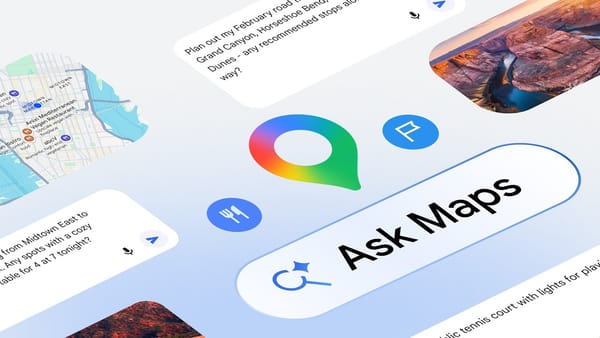
Traditional local SEO optimizes for the ten blue links. Ask Maps is different. It's the AI-powered answer layer inside Google Maps that responds to conversational queries — "best mortgage broker near me," "dentist open Sunday in [neighborhood]," "family restaurant with parking downtown." Ask Maps reads location-specific content pages to decide which businesses to recommend. It surfaces 3–8 businesses per query. If your branch doesn't have content that speaks directly to its neighborhood, Ask Maps simply doesn't know it exists.
That gap is why 78% of local service brands — restaurant groups, real estate franchises, dental practices, mortgage lenders — are invisible in this channel despite having a Google Business Profile and a website. A profile isn't proof. Ask Maps rewards businesses that demonstrate local authority at the branch level, not brand-level strategy repeated across every location.
This is the core insight Paigent is built around: every branch needs its own proof. Not a copy of head office content with the address swapped. Actual neighborhood-specific content that signals what makes that location relevant to the queries Ask Maps is answering right now. The system doesn't just create content — it creates the right content for each location's specific context, so Ask Maps can confidently recommend your branch over the competitor two blocks away.
How Paigent Automates Branch-Level Ask Maps Authority: The Six-Step Process
This is the exact workflow Paigent runs for every multi-location operator on the platform.
- Brand setup — You input your brand voice, business model, and the core identity that should remain consistent across every location. This becomes the foundation all branch content inherits.
- Location addition — Add your locations at whatever scale fits your network: 10, 50, or 150+. Eight locations can be live within a single week.
- AI identifies location uniqueness — For each branch, the AI analyzes what makes that specific location distinct. Neighborhood context, local demand signals, the specific services or specialisms that branch offers. This is not a template fill.
- Branch-specific content topics suggested — The AI generates a set of content topic suggestions tailored to each location's neighborhood context. Topics are designed specifically to answer the kinds of conversational queries Ask Maps handles for that area.
- Content selection and generation — You select from the suggested topics. Paigent generates 5–10 optimized content pages per location, each built to match how Ask Maps reads and recommends local businesses.
- Manual or auto-mode publishing — Choose full autopilot (auto-publishing on your schedule) or manual approval for every post. Either way, content goes live without you writing a word.
The entire setup runs in approximately two weeks from first login to live content.
Why 78% of Multi-Location Brands Are Invisible — and What Changes That
The visibility gap isn't a mystery. Most multi-location brands run one content strategy from the center. The brand blog lives on the main domain. Every location page looks identical except for the address and phone number. From Ask Maps' perspective, that's one business — not 20 distinct local authorities.
Ask Maps is a recommendation engine. It answers a specific person's specific question in a specific location. To appear in those answers, your branch needs content that proves it's the relevant answer — not just that your brand exists. Branch-specific proof is what closes that gap.
Generic AEO tools handle brand-level authority well. They help your main site rank for broad industry questions. But they don't solve the branch problem: the dentist's office in the east end, the mortgage broker downtown, the restaurant near the stadium each need their own content identity. Applying one strategy across all of them produces one result — invisibility at the branch level, even when the brand is well-known.
Paigent's approach is different because the AI starts from what makes each location unique, not from what the brand wants to say. That's how you go from 0 Ask Maps presence to appearing in positions 1–3 across dozens of branches simultaneously — not by working harder on content, but by automating the right content at the right level. For operators running multi-location networks, that's the difference between growing foot traffic location by location and scaling it across the whole network at once.
How Paigent Approaches Ask Maps Automation at Scale
Paigent's Multi-Location Ask Maps Authority Automation is built specifically for brands operating 3 or more locations — the point at which manual content creation per branch becomes operationally impossible without a dedicated team. The platform is engineered so that scale is a feature, not a constraint.
The same workflow that handles 10 locations handles 150. The AI identification step runs independently for each branch, so adding locations doesn't dilute content quality — it replicates the uniqueness engine, not a template. That's the architectural difference. A competitor's tool might generate 10 blog posts and distribute them with location names swapped in. Paigent runs a separate content intelligence process per branch, so the east-side salon gets east-side content and the downtown location gets downtown content.
Beyond content generation, the platform captures location-specific customer language through voice and text review input in 77 languages — automatically transcribed and translated. Those reviews feed back into the content generation system, creating a unified loop where real customer signals continuously inform what Ask Maps sees for each branch. Reviews can be auto-formatted for Google Business Profile or Instagram. Auto-generated Instagram posts pull from reviews and branch photos. Every piece of output is consistent with your brand voice because the brand setup in Step 1 governs all downstream content — always on-brand, across every branch and every topic.
Why Choose Paigent
Paigent generates branch-specific proof at scale so every location wins its local AI search — not as a positioning statement, but as the literal mechanical output of the platform. Here's what that means in practice.
The six-step automated workflow runs from brand setup to auto-publishing with no marketing team and no content staff required. You don't hire a writer for each location. You don't manage a spreadsheet of 50 different content calendars. The AI identifies what makes each location unique and suggests branch-specific content topics — so the content your Midtown branch publishes is answering Midtown queries, not recycled brand copy.
The platform is always on-brand: consistent voice across every branch and every topic, because every content output inherits from the same brand foundation you set up on day one. That consistency matters to Ask Maps, which rewards coherent, authoritative signals — and it matters to your customers, who should experience the same brand quality whether they're at location 3 or location 47.
Live in minutes with a 14-day free trial, no credit card required. No contracts. Cancel anytime. And unlike platforms that chase generic brand AEO, Paigent is built specifically for Ask Maps and Local AEO ranking — the channel where 89% of local searches are now happening as conversations, and where 3–8 businesses per query are all that gets recommended.
Addressing the "We Don't Have a Content Team" Concern
This is the most common hesitation multi-location operators bring to the conversation — and it's the one Paigent is specifically designed to eliminate.
Content requirements for Ask Maps authority are real. Each branch needs location-specific pages, updated regularly, aligned to conversational search queries. For a 20-location brand, that's 20 content programs running simultaneously. For a 100-location franchise, it's 100. No internal marketing team scales to that. Agencies charge per location. Freelancers introduce inconsistency. The math never works.
Paigent flips the model. The platform doesn't reduce the content requirement — it automates meeting it. The AI does the work that a content strategist, a writer, and a local SEO specialist would otherwise split between them: identifying what's unique about each location, determining which topics serve Ask Maps queries for that area, generating the content, and publishing it. You retain control through manual approval mode if you want it, or hand the publishing entirely to auto-mode.
The operational result: multi-location brands with no dedicated content resource can run a full branch-level Ask Maps content program. Eight locations can go live in one week. Expected ranking improvements within 4–8 weeks. Ten to twenty new calls per month per branch projected by Month 2. The content work gets done — just not by your team.
Ready to see what Ask Maps visibility looks like across your locations? Get started with Paigent's 14-day free trial — no credit card, no contract — and see branch-specific proof working for your network within weeks.
Frequently Asked Questions
How does Paigent generate content that's specific to each branch location?
Paigent's AI analyzes what makes each branch location unique before generating any content. It identifies neighborhood-specific context, local demand signals, and location-relevant topics — then generates 5–10 optimized content pages per branch designed specifically for Ask Maps conversational queries. This runs independently for each location, so content isn't centralized brand copy distributed with address swaps. Every branch gets its own content identity.
What is Ask Maps, and why does branch-level content matter for it?
Ask Maps is the AI-powered recommendation layer inside Google Maps that answers conversational local queries — "best mortgage broker near me," "dentist open Sunday in [neighborhood]." It surfaces 3–8 businesses per query. Ask Maps reads location-specific content to decide which businesses to recommend. Branches without neighborhood-specific content proof are effectively invisible to this channel, which is where 89% of local searches now happen as conversations.
How long does it take for Paigent to produce visible ranking improvements?
Paigent's documented setup timeline is approximately two weeks from first login to live content. Expected Ask Maps ranking improvements typically follow within 4–8 weeks of content going live. By Month 2, branches can expect 10–20 new inbound calls per month as a projected outcome. Eight locations can be onboarded and live within a single week, making multi-location rollout operationally fast.
Does Paigent work for multi-location brands without an internal marketing team?
Yes — Paigent is built specifically for this situation. The platform automates the entire content workflow: AI identifies location uniqueness, suggests branch-specific topics, generates content, and publishes via auto-mode. No writers, content strategists, or local SEO specialists are required. Multi-location operators running 3 to 150+ locations can maintain a full branch-level Ask Maps content program without any dedicated content resource.
How does Paigent handle brand consistency across dozens of locations?
Brand voice and business model are configured in Step 1 of the six-step workflow. Every content output across all branch locations inherits from that brand foundation — same tone, same vocabulary, same positioning. The result is consistent brand voice at every branch while content topics and neighborhood-specific details remain locally relevant. This means location 3 and location 47 both sound like the same brand, even though their content is completely distinct.
Can Paigent capture location-specific customer language from reviews?
Yes. Paigent supports voice and text review input in 77 languages, with automatic transcription and translation. Location-specific reviews feed back into the content generation system, so real customer language from each branch continuously informs what Ask Maps sees for that location. All reviews require business owner approval before publishing and can be formatted automatically for Google Business Profile or Instagram.
What commitment is required to start with Paigent?
Paigent offers a 14-day free trial with no credit card required. There are no contracts, and you can cancel anytime. The platform is designed for multi-location businesses operating 3 or more locations. Setup takes approximately two weeks, and the trial gives you full access to test branch-specific content generation across your locations before making any financial commitment.