
You're Showing Up on Google. But Are You Showing Up When People *Ask*?
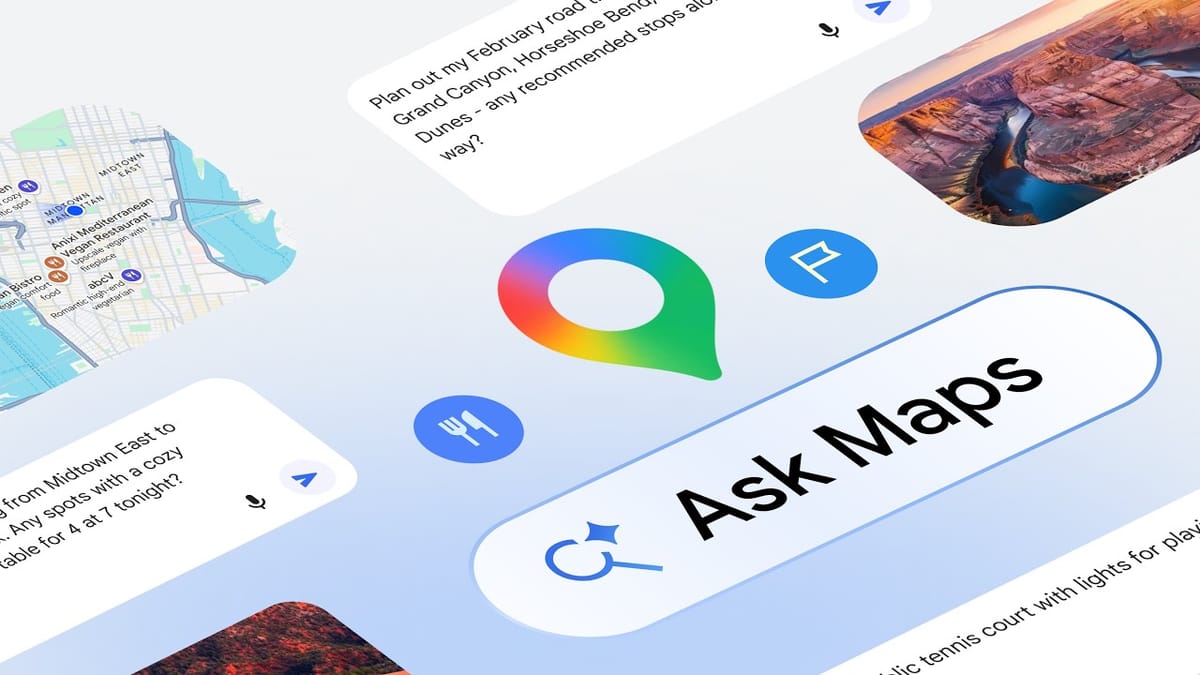
78% of local service brands are invisible to Ask Maps. See how Paigent generates branch-specific proof at scale so every location wins its local AI search.
You're Showing Up on Google. But Are You Showing Up When People Ask?
Your locations rank on maps. Your Google Business profiles are claimed. You've done everything right — or so it seemed. Then you notice something: a competitor two blocks away keeps getting mentioned when someone asks Google Maps "best mortgage lender near me" or "top restaurant for date night in [neighborhood]." Your branch isn't in the answer. It isn't even close.
Key Takeaways
- 82% of local searches now happen as conversations in Google Maps — not keyword queries, but natural-language questions that return 3–8 businesses per answer, not pages of results.
- 78% of local service brands are invisible to Ask Maps, according to the 5W AI Visibility Index (2026) — meaning most multi-location operators have an urgent, unaddressed gap.
- Paigent is built specifically for Ask Maps / Local AEO ranking, not just generic brand AEO — the distinction matters for brands with 3 or more locations competing for neighborhood-level answers.
- Branch-specific proof drives Local AEO placement — Paigent's six-step automated workflow generates location-specific content so every branch can win its local AI search independently.
- The trial is risk-free — 14-day free trial, no credit card required, no contracts, cancel anytime.
The Shift Nobody Sent You a Memo About
You optimised for search. That was the right call — in 2019.
The search landscape has moved. Quietly, then all at once.
Today, when someone opens Google Maps and types "best real estate agent helping first-time buyers near me" or "which mortgage lender in this area handles self-employed applicants," they're not browsing a list of ten blue links. They're getting a conversational answer. AI surfaces 3–8 businesses. It cites sources. It picks winners based on evidence it can find about each specific location.
That evidence is called local proof. And most multi-location operators don't have it — not because they haven't tried, but because the old playbook didn't require it.
Traditional SEO rewarded your domain. Local AEO rewards your branch. Those are two entirely different games.
If your franchise in one neighborhood has no branch-specific content — no neighborhood-specific signals, no proof that this location serves this community — AI has nothing to cite. Your branch stays invisible, even if your brand is strong nationally. According to the 5W AI Visibility Index (2026), 78% of local service brands are in exactly this position right now.
The gap between brands who understand this and brands who don't is growing every day.
Why Multi-Location Operators Face This Problem at Scale
Here's what makes this particularly hard for operators managing 10, 50, or 150+ locations.
The invisibility problem isn't one problem. It's multiplied by every branch you run.
A single-location business can create location-specific content manually — one page, one owner, one neighborhood to understand. That's manageable. For a restaurant group with 40 sites, a retail chain with 90 stores, or a mortgage network with 60 branches, manual content at branch level isn't a strategy. It's a staffing crisis.
So what usually happens? Operators publish the same content across every location. Same copy, same topics, different address. From a Local AEO standpoint, that signals nothing unique about any individual branch. AI can't differentiate Branch A from Branch B. Neither branch wins its local AI search.
The scale paradox is real: the more locations you operate, the harder it is to generate branch-specific proof — and yet the more you need it. A restaurant group can't afford for its Midtown location to lose to a smaller competitor that simply has more neighborhood-relevant content published.
This is the structural challenge Paigent's Multi-Location Ask Maps Authority Automation was designed to solve directly. It's built for brands with 3 or more locations — the exact operators for whom manual local content isn't viable.
How Paigent Solves This: The Six-Step Automated Workflow
This is what running local AEO on autopilot actually looks like in practice.
- Brand setup — configure your brand voice, positioning, and content guardrails once. Every piece of content generated inherits this foundation, keeping you always on-brand across every branch and every topic.
- Add your locations — whether you have 10, 50, or 150+ branches, you load them into Paigent's system. Each location is treated as its own entity, not a copy of the master profile.
- AI identifies what makes each location unique — Paigent's AI analyses each branch individually: its neighborhood, its surrounding community signals, its specific service context. This is where generic multi-location tools stop. Paigent goes further.
- AI suggests branch-specific content topics — rather than applying a one-size template, the system surfaces neighborhood-specific angles for each branch. A mortgage lender in a first-time-buyer suburb gets different content topics than its branch serving a high-net-worth downtown corridor.
- Select and generate content — review the AI-suggested topics, approve, and generate. This step scales to any location count without proportional effort on your team's part.
- Publish manually or activate auto-mode — choose your control level. Publish each piece yourself for full oversight, or turn on auto-publishing for fully automated, branch-specific proof generation at scale.
The entire workflow — from brand setup to live content — is designed to get your locations generating local proof without building a content team per branch.
---
The Real Cost of Staying Invisible
Let's put numbers to the problem, because the stakes are specific.
Ask Maps shows 3–8 businesses per query. If your branch isn't in that set, you receive zero of that traffic. Not reduced traffic — zero. There is no page two.
For dental clinics, Paigent's data estimates $150K–$250K in additional annual revenue per clinic from new patients gained through Ask Maps visibility. For salons, the figure is $50K–$100K per salon per year, with an average of 8–12 more walk-in bookings per month directly attributable to Ask Maps placement.
Consider what that means across a network. A salon group with 20 locations, each gaining $50K annually, represents $1M in incremental revenue that currently sits uncaptured — because 78% of local service brands haven't yet solved their Ask Maps invisibility.
The hesitation is understandable. New channels require trust. But the mechanism here isn't experimental. Ask Maps Optimization (Local AEO) is a documented ranking system with verifiable inputs — branch-specific proof — and measurable outputs — walk-in volume, revenue, position in the AI answer.
A restaurant group case produced +34% walk-ins in 90 days. A dental practice reached +56% walk-ins in 60 days. A salon network hit +47% walk-ins in 90 days. These are outcomes from the same system, applied to different verticals.
If you're running a multi-location business and haven't yet audited your Ask Maps visibility, it might be worth checking what your branches currently look like from the AI's perspective.
---
Why Choose Paigent
Paigent isn't a generic SEO platform with a "local" tab bolted on. Here's what differentiates it precisely.
Generates branch-specific proof at scale so every location wins its local AI search. That's the core mechanism — not brand-level AEO, but branch-level, neighborhood-specific proof that gives AI a reason to cite each individual location.
Six-step automated workflow from brand setup to auto-publishing. The system handles the operational complexity of multi-location content so your team doesn't have to scale headcount alongside your location count.
AI identifies what makes each location unique and suggests branch-specific content topics. This is the capability that makes scale possible without sacrificing relevance. Generic content doesn't win local AI search. Neighborhood-specific content does.
Always on-brand — consistent voice across every branch and topic. Your brand guidelines are set once. Every piece of content, across every location, stays within them automatically.
Live in minutes with a 14-day free trial, no credit card required. For salon operators, Paigent has demonstrated 8 salons live in one week. The Review Management component supports 77 languages for voice and text reviews, auto-translating to English, French, and Mandarin — relevant for any multi-location operator serving linguistically diverse communities.
Built specifically for Ask Maps / Local AEO ranking, not just generic brand AEO. The distinction is the product. Competitors competing on general AEO positioning miss the branch-level specificity that determines who appears in a local AI answer.
No contracts. Cancel anytime.
---
The Visibility Gap Is Addressable — Here's Where to Start
If you manage multiple locations and haven't thought specifically about Ask Maps visibility, you're likely in the majority — 78% of local service brands currently are. That's not a criticism; it reflects how recently this channel has become decisive.
The shift is documented: 89% of local searches now happen as conversations in Google Maps. The window between early movers and the rest of the market is real, but it's still open.
Paigent exists for exactly this moment. It's worth exploring what your branches currently look like in Ask Maps answers — and whether the locations you've invested in building are actually showing up when the people in your neighborhoods ask.
If you're running 3 or more locations and want to understand the gap, it might be worth starting with Paigent's 14-day free trial. No credit card. No contracts. Just a clearer picture of where your branches stand — and a system to do something about it.
---
Frequently Asked Questions
How does Ask Maps differ from regular Google Maps search, and why does it matter for my branches?
Ask Maps refers to the conversational AI layer in Google Maps that answers natural-language questions — "best mortgage lender near me for self-employed buyers" — rather than returning a ranked list. It surfaces only 3–8 businesses per query, with no page two. According to Paigent's data, 89% of local searches now happen as these conversations, meaning branches without branch-specific local proof are invisible to a significant portion of nearby search activity.
What type of businesses is Paigent's Multi-Location Ask Maps Authority Automation built for?
Paigent is built for brands operating 3 or more locations — including mortgage lenders, restaurant groups, real estate franchises, retail chains, dental clinic networks, and salon groups. The system scales from small multi-location operators to networks of 150+ branches, applying the same branch-specific proof generation workflow to each location individually rather than duplicating content across the network.
What does 'branch-specific proof' mean in practice, and why does generic content not work for Local AEO?
Branch-specific proof is location-level content and signals that demonstrate to AI what makes a particular branch relevant to a particular neighborhood. Generic content — the same copy with a different address — gives AI no differentiating reason to cite one branch over another. Paigent's AI identifies what makes each location unique and generates neighborhood-specific content topics per branch, which is what Ask Maps ranking requires.
How quickly can a multi-location operator expect to see measurable results from Paigent?
Paigent's verified outcomes show a dental practice achieving +56% walk-ins in 60 days, a salon network reaching +47% walk-ins in 90 days, and a restaurant group gaining +34% walk-ins in 90 days. For salon operators specifically, 8 salons have been brought live within one week. Results are branch-level and depend on the current Ask Maps visibility gap for each location, but the average across verticals is +40% walk-in increase by Day 90.
How does Paigent's Review Management feature support multi-location operators serving diverse communities?
Paigent's Review Management supports voice and text review collection in 77 languages, with auto-translation into English, French, and Mandarin. For multi-location operators — particularly restaurant groups, retail chains, or mortgage lenders serving linguistically diverse neighborhoods — this ensures review signals captured in any language are processed and fed back into the content generation system, keeping every branch's local proof current and representative.
What is the six-step automated workflow, and how does it reduce the manual effort required at scale?
The workflow runs: brand setup → add locations (10, 50, or 150+) → AI identifies what makes each location unique → AI suggests branch-specific content topics → select and generate content → publish manually or activate auto-mode. Each step is designed to remove the proportional effort typically required to produce location-specific content at scale. Auto-mode enables fully automated, always on-brand content publishing across every branch without per-location manual input.
What commitment is required to try Paigent, and is there a minimum location count?
Paigent offers a 14-day free trial with no credit card required and no contracts — cancel anytime. The platform is built for brands with 3 or more locations, so there is a minimum threshold, but there is no upper limit: the system is designed to handle networks of 150+ branches within the same workflow. The trial gives multi-location operators a working view of what branch-specific proof generation looks like for their specific network.